Author: Roy Source: Metaspaceship
According to business registration information, Shanghai Solana Enterprise Management Co., Ltd. was established on June 25, 2026, with a registered capital of 5 million yuan. The legal representative is Du Yanjing, and the registered address is Room C, 14th Floor, No. 309 Tanggu Road, Hongkou District, Shanghai (centralized registration location). The entity type is a sole proprietorship limited liability company.
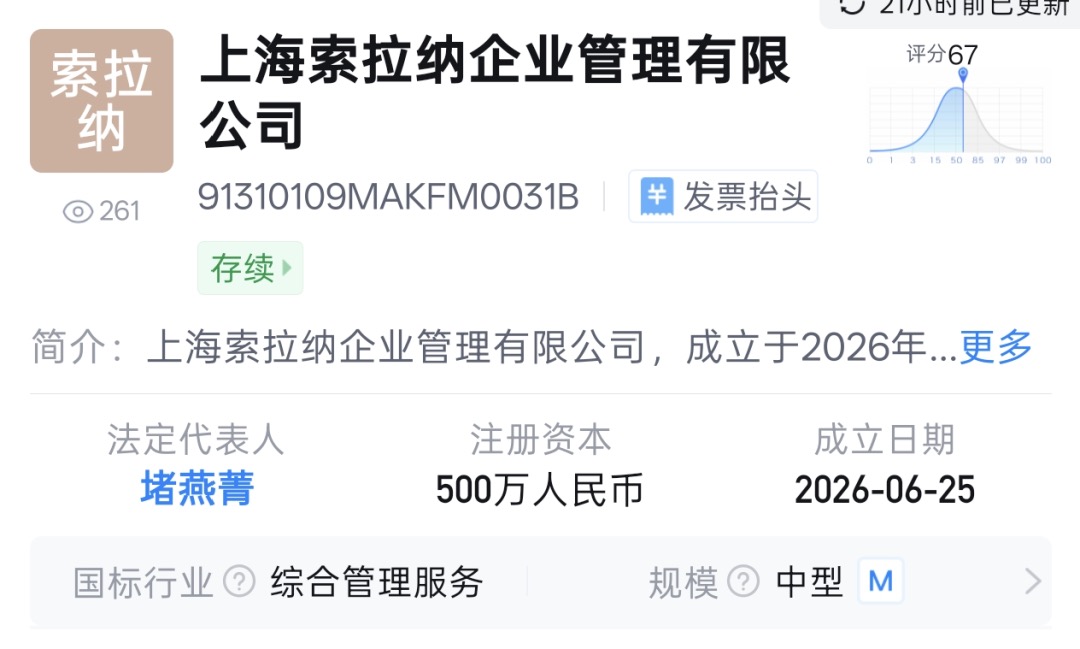
The business scope includes enterprise management, information consulting, financial consulting, trade brokerage, marketing planning, conference and exhibition services, software development, artificial intelligence application software development, big data services, and internet data services. The terms "virtual currency," "cryptocurrency," "token," "stablecoin," and "RWA" do not appear.
Public information also shows that in August, the company established "Shanghai Yaokun Qiusuo Digital Technology Co., Ltd." (with a registered capital of 10 million yuan) with a 45% stake. Jiang Yiwen serves as the chairman and Du Yanjing serves as a director, extending the business entity from "enterprise management company" to "digital technology company".
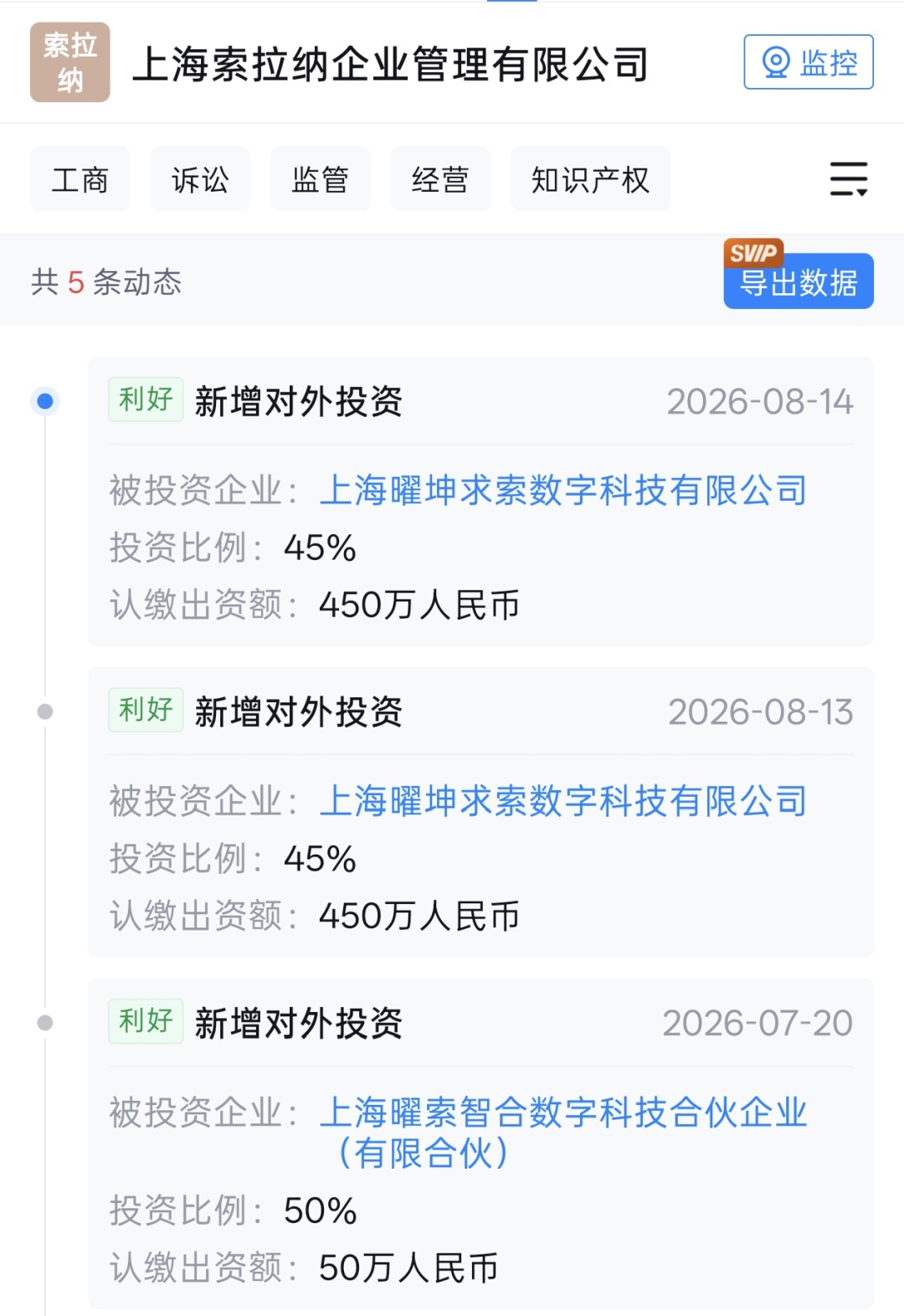
It should be noted that there is currently no direct evidence in the business equity chain to prove that the company has a legal connection with the Solana Foundation, Solana Labs, or SOL tokens. The outside world refers to it as "Solana Shanghai Company" more as an inference based on personnel identities and brand activities.
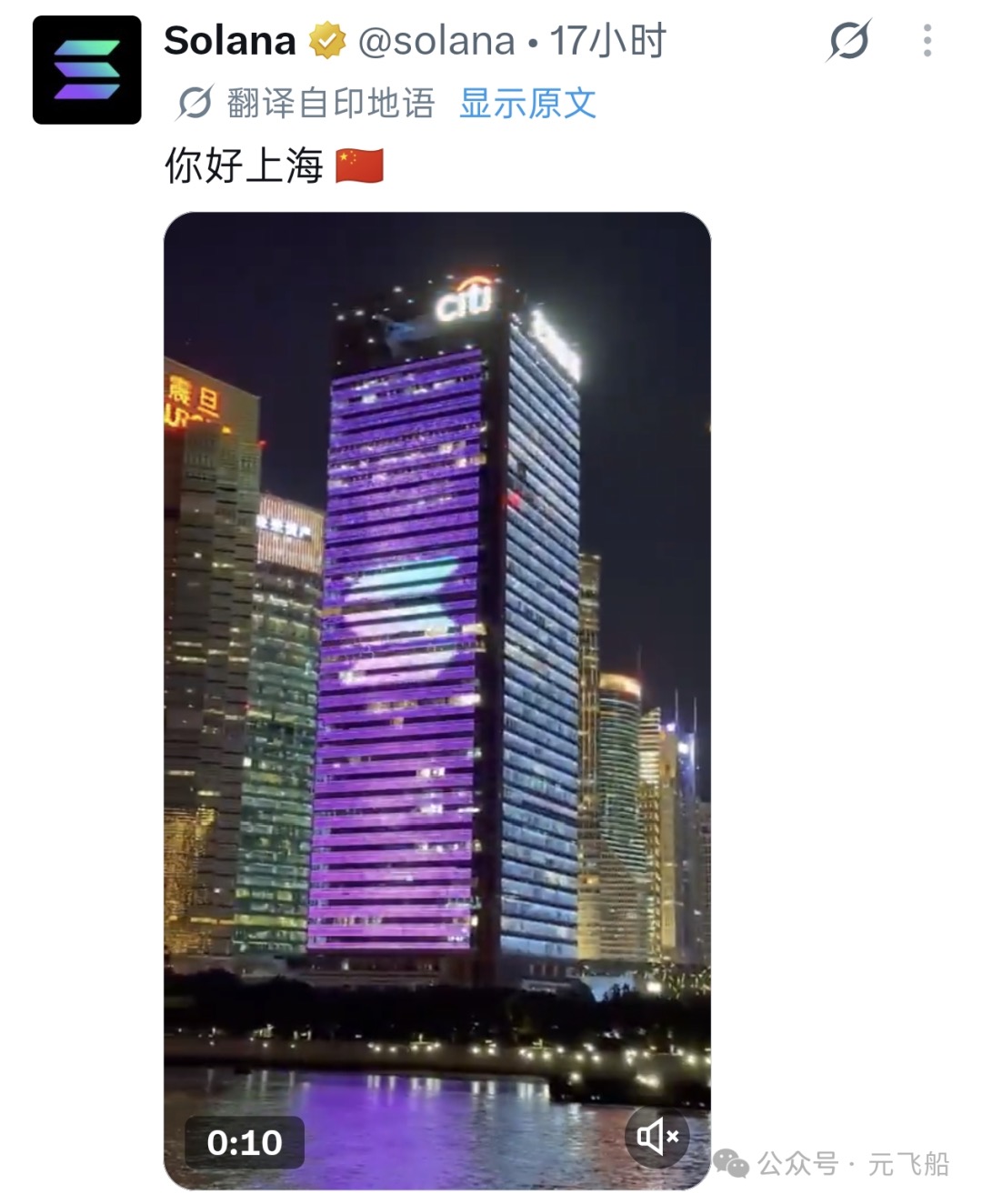
On the evening of October 14, the Citibank Tower in Lujiazui, Shanghai, lit up with a purple-blue "SOLANA" logo advertisement on its river-facing facade, displaying it across the Huangpu River to the Bund, attracting tourists on the opposite Bund to stop and take pictures.
Rachel Conlan, Chief Strategy Officer of the Solana Foundation, posted a video at the X event with the caption "Ni hao shanghai." Lily Liu simultaneously confirmed the opening of the Shanghai office, calling it one of the "world's highest-end commercial office spaces."
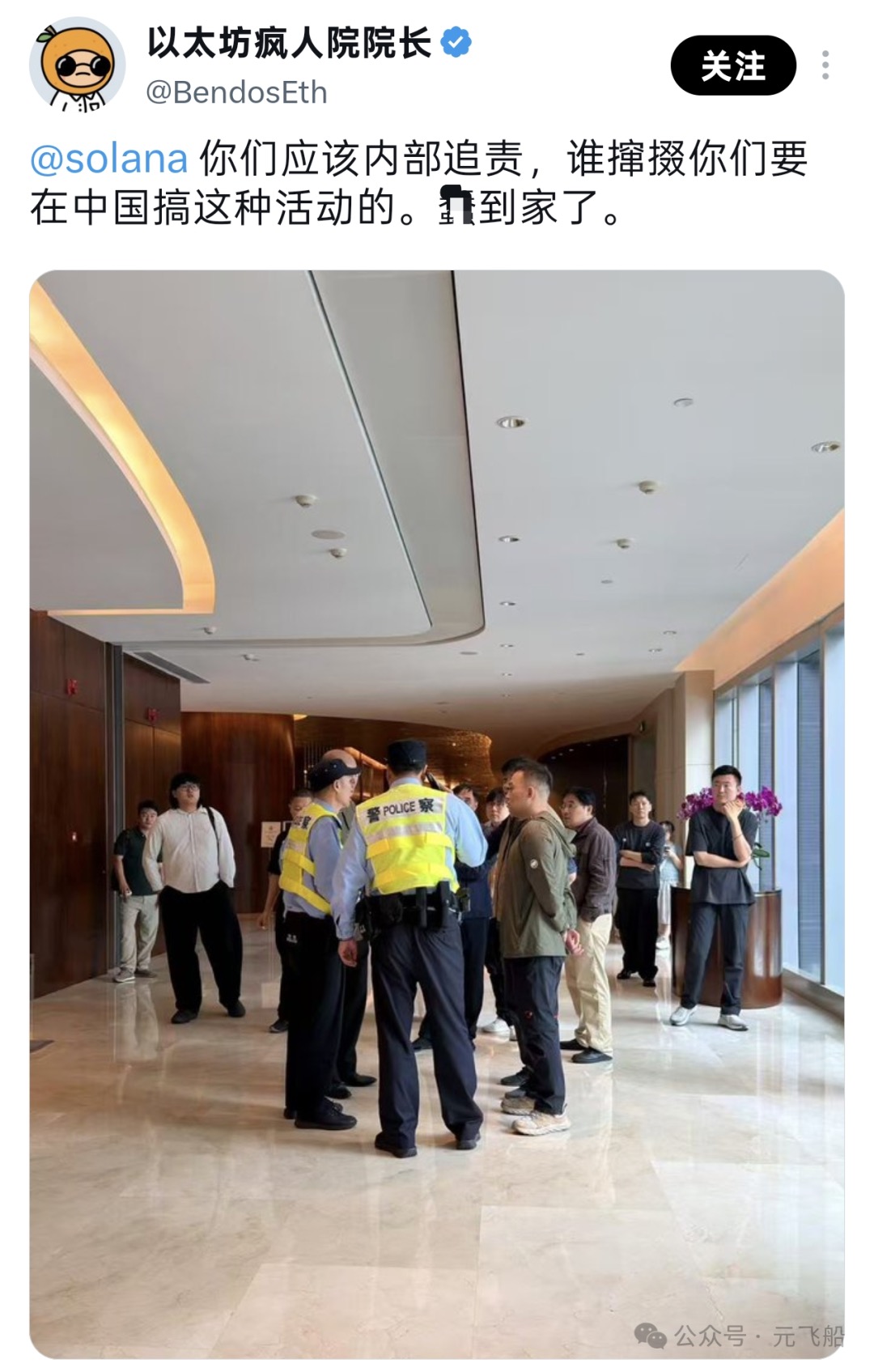
The first stop of Solana Accelerate China 2026, originally scheduled to open on the morning of October 16 at the Shangri-La Hotel in Shanghai, was called off before it even started. The organizers first sent an email saying that it was postponed due to venue and logistical considerations. Lily Liu later explained on X that after the publicity was exposed, the number of registrations quadrupled overnight, far exceeding the number of people reported to the competent authorities, so it was postponed. Several attendees at the scene said that there were 8-9 law enforcement officers at the hotel, and some people were trapped outside the cordon for more than an hour.
The reason why Solana's trip to China was blocked is not hard to guess. Previously, the "Notice on Further Preventing and Handling Risks Related to Virtual Currency" issued by the People's Bank of China and eight other departments in 2026 reiterated that all virtual currency-related businesses are prohibited as illegal financial activities, and included stablecoins, RWA tokenization, and services provided by overseas entities to the domestic market in the red line.
Lujiazui and the Bund are public financial landmarks, and the audience for their large screens includes not only developers but also tourists and citizens. Therefore, even if the screen does not explicitly state "Buy SOL," the public exposure of the blockchain brand itself has already stepped into the gray area of "marketing and promotion." Offline activities are further constrained by the reporting requirements for the number of participants in large-scale events. Exceeding the registration limit does not automatically equate to a violation, but the combination of "exceeding the reported number of participants + crypto brand + core business district" will immediately tighten local regulatory oversight.
Source:Global Cybersecurity Alliance (GCSA)
Website:www.gcsa.org
Get updates in your inbox
We respect your privacy. See our Privacy Policy